Across Irish retail, we keep seeing the same thing. Well-run shops, loyal customers, and hardworking owners are still relying on traditional Cash Registers, handwritten records, and manual stock counts. While Cash Registers have been a trusted tool for retailers for decades, they often don’t provide the visibility businesses need today.
The Hidden Problems with Cash Registers
When you’re writing down sales or tracking stock by hand, it feels simple. It’s familiar. It’s what you’ve always done. But it also creates blind spots in your business.
Most retailers in this position don’t actually know:
- What they sold last week in real numbers
- Which products are performing best
- What stock is sitting on shelves and not moving
- How much are they really making day to day
It’s not that the information isn’t there — it’s just not being captured in a useful way.
Manual stock counting — where time disappears
For many retailers, stock takes still look like this:
- Count everything by hand
- Write it down
- Enter it later into a spreadsheet or system
- Go back and fix mistakes
Even with a good team, you might reach around 1,000–1,500 items per hour in ideal conditions. In reality, it’s often slower.
People get interrupted. Numbers are misread. Items need to be checked again. The process gets broken up and repeated. And those small errors turn into inaccurate stock levels, poor ordering decisions, and ultimately, missed sales.

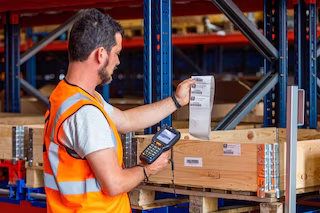
A smarter way: scanning with a POS system
Now compare that to using a modern POS system
with barcode scanning:
- Scan the item
- Quantity updates instantly in the system
- Stock levels stay accurate in real time
- No double-handling of data
- No re-keying from paper to system
- Fewer manual touchpoints, fewer chances for error
Simple.
Most retailers find this alone makes the process 3 to 5 times faster, meaning you can move from roughly 1,000–1,500 items per hour to 3,000–6,000+ depending on your store size and staff experience.
But speed is only part of the difference.
Because the real shift isn’t just how fast you count — it’s how reliable the data becomes. When stock updates instantly as you scan, you’re no longer working from estimates or delayed entries. You’re working from what’s actually happening in your store right now.
And that’s where the real value shows up, fewer surprises at the till, better ordering decisions, and far more confidence in your numbers day to day.
Know what’s actually happening in your business
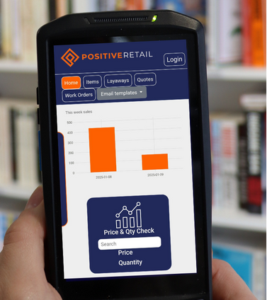
When your sales and stock are tracked properly, you’re no longer guessing. You can see:
- What’s actually selling well, and what’s just sitting there
- What needs reordering before you run out, instead of reacting too late
- Your real margins, not estimated ones, once costs, discounts, and movement are factored in
- Your daily performance in real time, not days or weeks later
And that changes how you run your business.
Instead of reacting to problems after they’ve already happened, you can start making decisions ahead of time. You can plan stock more accurately, spot trends earlier, and avoid tying up cash in products that aren’t moving.
Over time, it shifts you from “running the shop” to actually managing and improving it — with far more control, and far less uncertainty.
Related Posts
Christmas Stock: Why Retailers Should Order Early
Planning your Christmas stock early can help you avoid shortages and excess stock. Use sales data and reports to prepare for the Christmas rush.
RMH Wizards: Simplify Retail Product Management
Discover RMH Wizards, practical tools for managing products, inventory and labels, helping retailers save time and simplify everyday retail tasks.
Q4 in Retail: How to Prepare for Peak Trading
Discover what Q4 in retail means for your business and how the right technology can help you manage stock, sales and promotions during peak season.