Looking at your total sales is a good starting point, but it does not tell you everything you need to know.
To understand what is really happening in your business, retailers need to look at the numbers behind their sales, customers and stock.
These numbers are known as Key Performance Indicators (KPIs).
The right KPIs can help you identify what is working, where there are opportunities to improve and where your business may be losing money.
While there are many retail KPIs you can track, here are five of the most important metrics every retailer should keep an eye on.
1. Total Sales
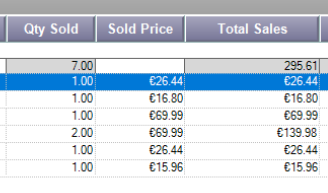
It may seem obvious, but total sales remain one of the most important retail KPIs to track. Monitoring your sales over time gives you a clear picture of how your business is performing and helps you identify trends, changes in customer demand and areas for improvement.
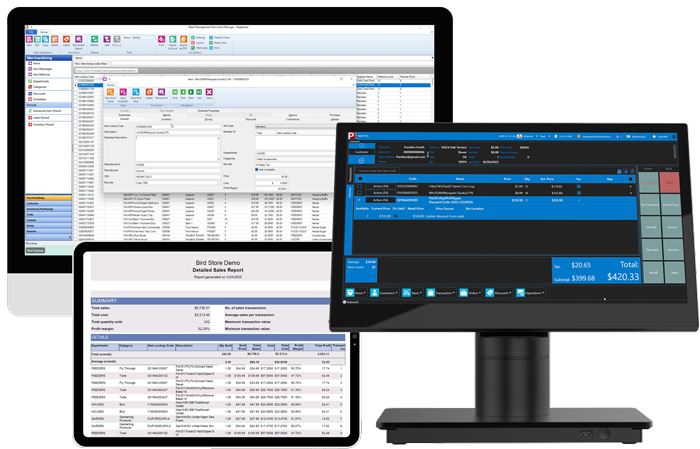
With RMH’s built-in reporting, retailers can access detailed sales information directly from their retail system, making it easier to monitor performance, compare results and make more informed business decisions.
2. Average Transaction Value
Average Transaction Value (ATV) tells you how much customers are spending each time they make a purchase.
The calculation is simple:
Total Sales ÷ Number of Transactions = Average Transaction Value
For example, if your store takes €20,000 from 1,000 transactions, your average transaction value is €20.
Increasing your average transaction value can be a powerful way to grow revenue without necessarily needing to attract more customers.
Strategies such as upselling, cross-selling, product recommendations and bundles can all help encourage customers to purchase more.
By using your POS reporting, you can monitor your average transaction value and see whether these strategies are making a difference.
3. Stock Turnover
For many retailers, stock represents one of their biggest investments.
That makes stock turnover an important KPI to monitor.
Stock turnover measures how quickly your inventory is being sold and replaced.
A low stock turnover could indicate that you are holding too much stock or that certain products are not selling as expected.
With the right retail system and reporting, you can identify:
- Fast-moving products
- Slow-moving products
- Products sitting in stock for too long
- Stock levels across locations
- Products that need to be reordered
RMH reporting can give retailers greater visibility of their sales and stock performance, helping them make more informed purchasing decisions and reduce the amount of money tied up in slow-moving stock.
4. Gross Margin
Strong sales are great, but profitability matters too.
Gross margin shows how much of your sales revenue remains after the cost of the goods sold has been deducted.
For example, if you sell a product for €100 and it costs your business €60, your gross profit is €40.
Monitoring gross margin can help you understand which products and categories are actually contributing to your bottom line.
It can also highlight the impact of:
- Discounts
- Promotions
- Supplier costs
- Pricing changes
- Product mix
A product that sells extremely well is not necessarily your most profitable product.
Using your retail reporting to look at sales alongside margins can help you understand where your business is generating the most value.
5. Sales Per Employee
Your staff play a major role in the performance of your store, making sales per employee another useful KPI to track.
This metric can help you understand how effectively your team is contributing to sales.
Comparing sales against staffing levels can help you identify patterns around:
- Busy and quiet periods
- Staff scheduling
- Store performance
- Employee productivity
- Staffing requirements
For example, if sales are consistently higher during certain hours, you may want to review your staffing levels during those periods.
The goal is not simply to have fewer employees. It is about having the right number of staff available at the right time to provide a good customer experience while operating efficiently.
Our Retail Solution: RMH
At Positive Retail Systems, we provide RMH, a powerful POS and retail management solution built to help retailers run their businesses more efficiently.
RMH goes beyond processing transactions. With built-in reporting, retailers can easily track sales, stock, products and key performance indicators, all in one system.
With clear, accessible data at your fingertips, RMH makes it easier to spot trends, monitor performance and make informed business decisions, without relying on multiple spreadsheets or manually combining data.
Related Posts
5 Retail KPIs Every Retailer Should Be Tracking
Discover 5 essential retail KPIs to track, from total sales and stock turnover to gross margin and sales per employee, to improve performance.
Autumn/Winter Stock Planning: Use Your Sales Data
Improve your Autumn/Winter stock planning with sales data. Learn how retail reports can help you buy smarter, avoid overstock and reduce missed sales.
5 Steps for a Successful End-of-Summer Promotion
Plan a successful end-of-summer promotion with practical tips on offers, stock, eCommerce, staff and customer data to drive more retail sales.